In the first week of June 2026, hundreds of early-career artists opened an email that looked like the thing they'd been waiting for. It came from a member of the "selection team" for a buzzy, design-forward summer residency, and it read like an acceptance — or close enough that a lot of people read it that way.
Then the story turned. Many recipients said they had never applied to the 2026 edition. Some said they'd never applied to any edition. The organizers later clarified that the message didn't mean someone had been selected — only that they'd advanced to the next stage of review. By then the screenshots were everywhere, the comment sections were filling up, and a single confusing email had become something bigger: a referendum on how the emerging-art world asks artists to pay for hope.
This piece is not a verdict. We can't tell you from the outside whether any single program is "a scam," and we're careful with that word for a reason. What we can do — what RMAR exists to do — is lay out what's actually being alleged, who's saying it, what the organizers say back, and how you can read any opportunity's red flags before your $25 (or $50, or $600 a year) leaves your account.
What actually happened
The reporting and the artist accounts converge on a rough timeline:
- The blast. On June 5, an email went out from someone identified as part of the residency's selection team. Recipients describe language that read like an acceptance, or at least a strong signal of one. (Artnet News)
- The "wait, I never applied" problem. A significant number of recipients said they hadn't applied to this cycle — some hadn't applied at all. That detail is what tipped confusion into suspicion: a personalized-sounding "you've advanced" email is very different when it lands in the inbox of someone who never entered.
- The walk-back. Organizers clarified that the email meant advancement to a further review stage, not selection. To people who'd already celebrated — or already doubted — the clarification landed as damage control.
- The locked doors. As criticism mounted, comment sections were closed and some critics said they were blocked, which tends to escalate rather than calm a pile-on.
The allegations — and who's making them
The criticism clusters around a handful of specific, checkable claims. We're presenting them as allegations, attributed, not as findings of fact:
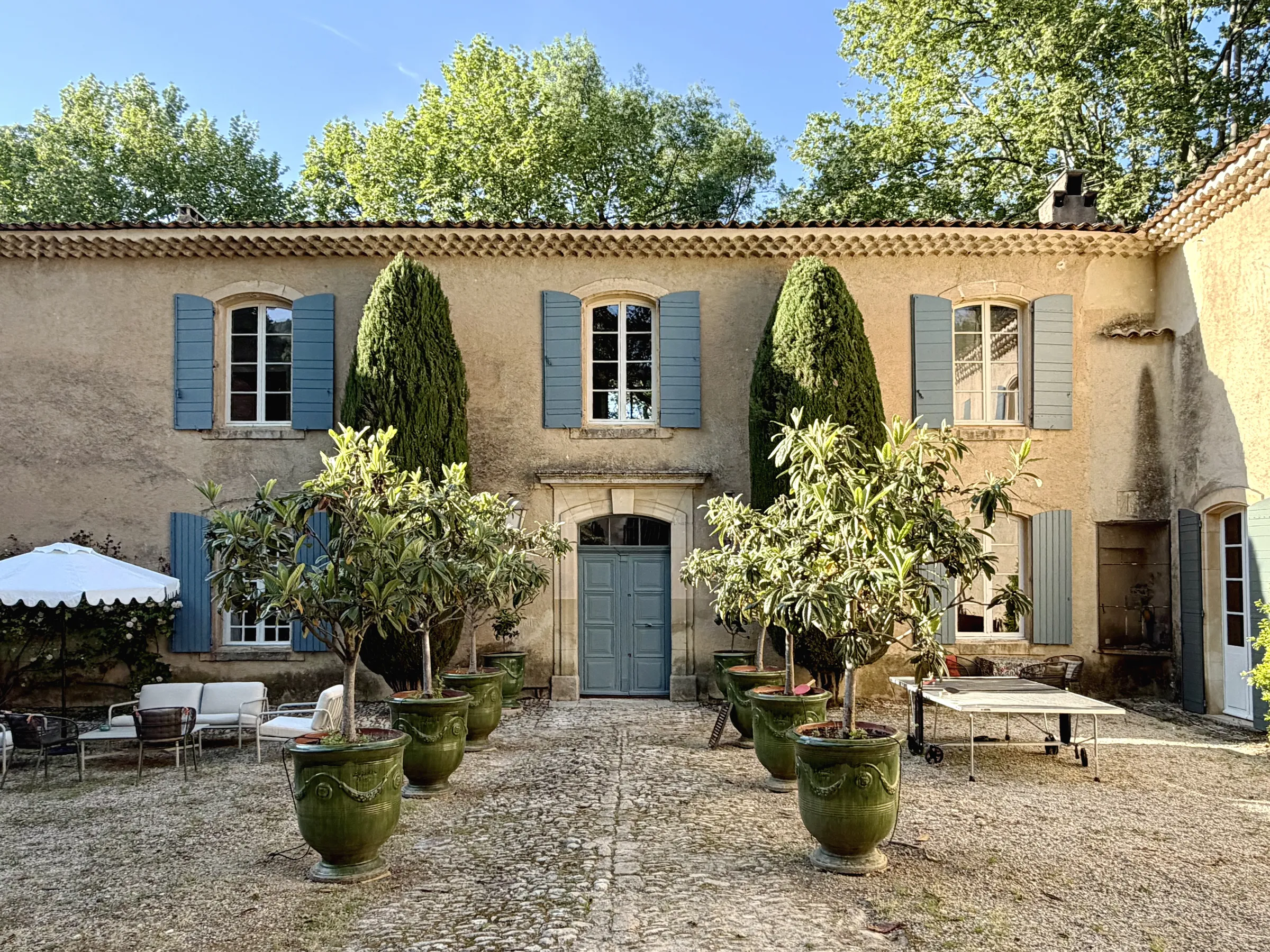
- Capacity vs. venue. Critics point out that promotional materials referenced hosting dozens of artists (figures like "50 selected" and "two groups" have circulated), while the advertised château reportedly has only around eight bedrooms. Note: the exact cohort numbers differ between sources, which is itself part of the problem — the public-facing details weren't consistent.
- Pay-to-play. A $25 application fee, multiplied across a very large applicant pool, is the engine of the "what is this really selling?" critique. As one Threads user put it after filling out the form and hitting a fee prompt: "Smells like scam. Be mindful." (@agtraphaus)
- Were the files even opened? Some applicants claimed that work samples shared via cloud links showed no "viewed" activity — i.e., that submissions may not have been reviewed. This is an allegation based on file-access indicators, not a confirmed fact, and we flag it as such.
- Undelivered promises (the prior edition). Scrutiny reopened on the 2025 inaugural edition in Marseille. Here the accounts genuinely split: some former participants defended their experience, while others said promised benefits — art materials, gallery representation — didn't fully materialize.
- A pattern bigger than one program. Several artists framed this less as one bad actor than as a familiar shape. "I have been suspecting this scam was becoming increasingly more common but it is so hard to prove," one wrote. (@sigmadelta.art)
The substack writer Constance Mary asked the question directly in a widely-shared post — "Is the 'Abstract Mag' Summer Residency a Scam?" — and the fact that the question is even being asked, by this many people, at this volume, is the story.
The other side
Fairness requires holding two things at once. A confusing mass email is not, by itself, proof of fraud. Organizations make operational mistakes; a poorly-worded "next stage" email sent to a bloated list is consistent with disorganization as much as with bad faith. Some 2025 participants stand by their experience. And the loudest online verdicts — "scam," "data miners," "it's all fake" — are running ahead of what anyone has actually proven. We have invited Abstract Magazine to respond and will publish their reply in full. If you ran this program and want to set the record straight, contact us.
That caveat is not a hedge. It's the whole point of how a platform like this should handle accusations: the artists deserve to be heard, and the accused deserves a right of reply, and the reader deserves to know which is which.
The real lesson: how to read an opportunity before you pay
Strip away the specific names and this episode is a teaching case. Here's the checklist we'd want every artist running before they pay a fee or celebrate an email:
- Does the email actually say what you think it says? "You've advanced to the next stage" is not "you're in." Re-read for the literal claim before you tell your friends — or your landlord.
- Did you even apply? An "acceptance"-flavored email for something you never entered is a five-alarm signal. Legitimate programs don't pull your name from nowhere.
- Do the numbers physically add up? Beds vs. bodies. Stipend math. "50 artists" in an eight-bedroom house is a question, not a detail.
- Follow the fee. A modest application fee is normal. A fee that appears after a "congratulations," or a fee attached to a vague promise of "representation," deserves a hard pause. Research repeatedly shows artists underestimate what opportunities cost them — and that most acceptances come from the cheapest applications, not the most expensive.
- Is there a real selection process you can describe? Who reviews? On what criteria? When? If you can't find an answer, that's an answer.
- What do past participants actually say — unprompted? Not the testimonials on the program's own page. The reviews they didn't control.
- How do they handle criticism? Locking comments and blocking critics is itself data.
Where RMAR comes in
This is exactly the gap we're built to close. An artist-written review can't be bought or deleted by the program it describes. Our transparency score surfaces the boring, checkable signals — verified location, year founded, last updated, how many artists a program actually hosts — that make capacity claims falsifiable. And the red-flag reporting we're building (structured community reports for "no real selection process," "facilities didn't match the listing," "hidden fees after acceptance," "pressure tactics") exists precisely so that the next time this happens, artists don't have to reconstruct the warning signs from scattered Instagram comments — they can read them in one place, before they pay.
If you applied to this residency — accepted, rejected, confused, or out $25 — leave a review. Not to pile on. To build the record the next artist will wish existed.
This story reached us through the artist community on Instagram. Our thanks to creators Seema R (@art_lust_) and Sarah Khorbtli (@its.sarahkhorbtli), whose posts first put it on our radar and prompted this piece.
Have firsthand documentation — emails, invoices, file-access logs? We'd like to see it, on or off the record. Get in touch.
Sources
- Artnet News, "Inside the Artist Residency 'Scandal' Dividing the Internet" — news.artnet.com
- USA Art News (mirror) — usaartnews.com
- Constance Mary, "Is the 'Abstract Mag' Summer Residency a Scam?" (Substack) — constancemary.substack.com
- Threads, @agtraphaus
- Threads, @sigmadelta.art