Three disclosures, because they shape everything that follows.
I have been an applicant. Flux Factory, Elsewhere, A residency in Berlin, the Contemporary Artists Center at Woodside, the LES Studio Program, a winter retreat in Chicago. I have paid the fees, written the statements, made the work, and gone.
I have been a builder. I founded Rate My Artist Residency in 2013, when the idea that artists might publicly review the programs they paid to attend was novel enough to make the art press. I then spent five years building Rivet, which grew to 1,200 organizations and 21,000 artists, supported by NEW INC at the New Museum, the Kate Spade & Company Foundation, the Made in NY Media Center, and Common Field, and advised by people who had spent their careers inside this problem. Artsy called it the new go-to platform for finding residencies. I spoke about this work at global residency conferences in Boston, Quebec, Madrid, and Los Angeles, and taught it at Parsons, Tisch, Moore, and the New School.
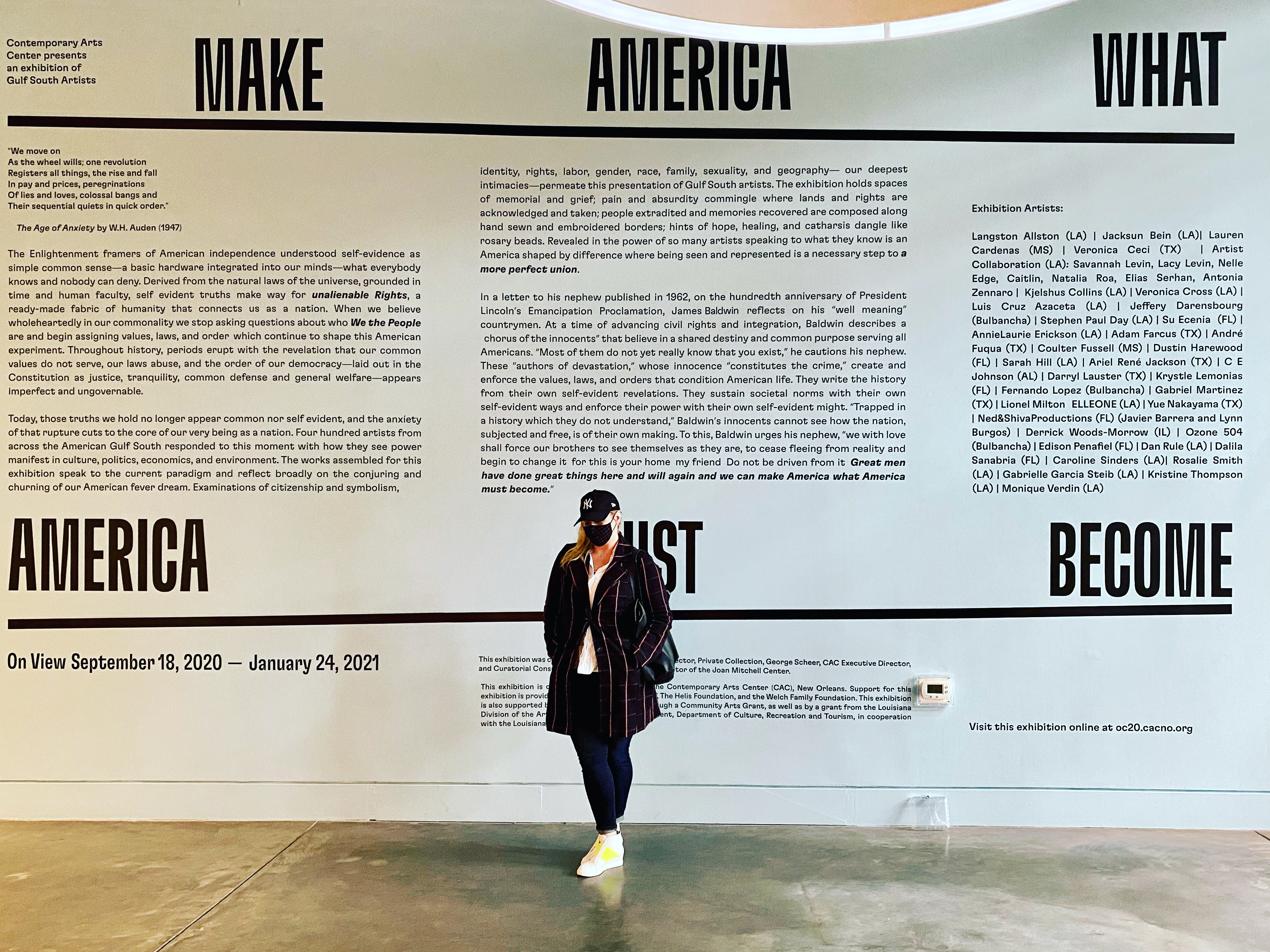
And I have been on the institutional side, where the terms are actually set. As guest curator at the Contemporary Arts Center New Orleans, I ran an open call with no application fee and secured a $100 honorarium for every one of the forty participating artists — the first artist honorariums in that institution's history. I have also directed a Chelsea gallery, run marketing at a downtown arts center, and managed a private collection of 2,500 works. I know how these decisions get made, because I have made them.
Applicant, builder, gatekeeper. I have paid the fee, collected the data, and written the rules. I am not describing this field from outside it, and I am not innocent of anything I'm about to describe.
What I found when I came back
I stepped away from building in this space around 2021. I went to work at a management consultancy on Fortune 100 brand and strategy problems, did an MBA CORe, and learned how organizations that are not chronically underfunded actually operate — how a budget gets defended, how a research finding becomes a line item, how nobody in the room has to justify why the person doing the work should be paid for it.
Then I relaunched Rate My Artist Residency, partly out of genuine curiosity. Ten years is long enough for a problem to get solved. I wanted to know whether it had been.
Here is what I found: there are far more places for artists to find opportunities than there were a decade ago, and finding an opportunity is not meaningfully easier than it was a decade ago.
That should be an odd sentence. It isn't, and I want to explain why.
The problem everyone solves
Open calls, residencies, grants, prizes, fellowships. This information sits on several hundred institutional websites in no shared format, with no common taxonomy, no standard deadline structure, and no agreement on whether a fee is a fee or a "materials contribution." There is no central body. There is no reason for any institution to standardize, because standardizing costs them something and gains them nothing.
Scattered information invites aggregation. Someone builds a directory. Someone builds a newsletter. Someone builds an app, then someone builds a better-looking app, then one with filters, then one with push notifications.
Aggregation is the obvious response, and it is also nearly free. The listings are public. You can collect them in an afternoon with a scraper and a spreadsheet. The barrier to entry is a weekend and a domain name.
Which is exactly why there are so many, and exactly why none of them fix anything. Every new aggregator adds one more place an artist has to check. The individual product improves; the aggregate experience degrades. We have spent a decade producing better-designed versions of the same unsolved problem, each launched in complete sincerity by people who believe they are consolidating a fragmented landscape while adding another fragment to it.
I have built two of these. The critique includes me.
The problem almost nobody solves
Here is what an aggregated feed cannot tell you.
Whether "studio provided" means a studio or a corner of a shared barn. Whether the fee is refundable if the program is cancelled. Whether you will be alone with the director in a rural location for six weeks. Whether the last four cohorts arrived to find the housing wasn't ready. Whether the stipend arrives before or after you've paid for your own flights. Whether this is a serious professional opportunity or a real estate arrangement with an artist statement attached.
That information exists. It lives in the heads of artists who have already gone, and it travels through group chats, studio visits, and warnings murmured at openings — which means it reaches people who are already connected and never reaches anyone else. It is distributed along precisely the lines this field already privileges.
Collecting it properly is expensive in every way that matters. It takes years, because you can only gather it as fast as people finish residencies. It requires trust, because artists risk their standing in a small field to tell the truth about a program they may need a reference from. It carries liability, because programs write letters when they don't like what's published. And it cannot be scraped, because it does not exist anywhere to scrape.
Cheap to aggregate. Expensive to evaluate. That asymmetry explains the entire shape of this market — why there are dozens of places to find an open call and almost nowhere to learn whether it's any good. Everyone builds the half that can be built in a weekend, because the other half takes a decade and has no revenue model waiting at the end of it.
What it costs artists
The cost doesn't land on the platforms. It lands on the people the platforms exist to serve.
An artist applying to residencies faces application fees on most serious programs, plus the work itself: the statement, the project proposal, the tailored image selection, the budget, the letters. Days per application, honestly assessed. Many programs run acceptance rates comparable to competitive graduate admissions. Most artists apply widely because they have no way to apply well.
So the real expenditure is weeks of studio time and real money, spent by people who are structurally underpaid, against odds they cannot see, on programs they cannot evaluate in advance, with no recourse when the program turns out to be badly run or misrepresented. No refund. No accreditation body. No ombudsman. Nowhere to file anything.
More listings do not reduce this cost. More listings increase it, because every additional option is another thing to research. What reduces the cost is knowing which programs not to apply to. That is the product. It has always been the product. Nobody builds it because it doesn't ship in a weekend.
I know the fee question can be solved, because I have solved it inside an institution. Removing the application fee at the Contemporary Arts Center cost the organization very little and changed who could afford to apply. It was not a budgetary impossibility. It was a default nobody had questioned.
How the cheap half gets built
Let me describe something that happened to me recently. I'm not naming anyone, because the individuals aren't the point and I'd rather the pattern stayed visible than turned into a fight.
I was approached by a new platform in this category. Friendly message, framed as an opportunity for me — language about partnership, visibility, driving traffic my way.
The actual proposition, once I asked three specific questions, was this: I would export my data, on a recurring basis, by hand, into their format, indefinitely, at no charge. In return I would receive a credit line. There was also a question about how many listings I could supply per week, so as not to overwhelm their feed — asked before I had agreed to supply anything at all.
Nothing was offered. Not money, not promotion, not audience access, not reciprocity of any kind. They had been operating for about a month. I have been doing this for thirteen years.
I don't think this was malice, and that's the part worth sitting with. Nobody involved had stopped to consider why the person holding the data would say yes — because in this field, people holding useful things have always simply handed them over. The ask wasn't rude. It was habitual. It is the same reflex that produces the unpaid studio visit, the exposure exhibition, the panel with a travel stipend and no fee, the internship that requires family money to accept.
And there's a loop here worth naming: platforms built on extracted labor have no revenue, so they cannot fund the expensive half of the problem, so they build the cheap half, add another fragment, and fold within two years. The next one starts from zero. The field's institutional memory resets, over and over, which is why nothing accumulates and why every returning practitioner discovers the same problem wearing a new interface.
What working outside this field taught me
In every other industry I've worked in, this data would be a business.
Organizations pay significant money for exactly this: independent evaluation of counterparties, verified reputational information, the ability to know what you are getting into before committing resources. Entire sectors exist to provide it. Nobody debates whether it should be paid for. It is understood as infrastructure, in the same category as an audit.
And the money moving through this ecosystem is not trivial. Foundations, councils, and university programs move real sums into residencies every year. What's missing isn't capital. It's any mechanism by which capital can distinguish a well-run program from a poorly-run one.
The art world has no budget line for evaluation. That is not a law of physics. It is a choice the field makes repeatedly — treating accountability as something volunteers should provide out of love, while treating the fees artists pay to apply as ordinary commerce.
I don't think the fix comes from artists. Artists are the least monetizable audience in existence, and charging them for safety information about programs that already charge them application fees just relocates the extraction. I don't think it comes from the programs either; you cannot sell accountability to the entity being held accountable without destroying the thing you're selling.
If it comes from anywhere, it comes from the money above both — foundations, arts councils, fiscal sponsors, and the degree programs that send graduates into these opportunities every year. These are institutions with real budgets currently funding residencies with no independent way to know which ones serve artists well. "Which residency should I apply to" is a question with no money attached. "Which residencies are worth funding" is the same question with a budget behind it, and as far as I can tell, nobody is answering it.
What I'm actually asking
I came back to find out whether this field still needed what I built. I was prepared for the answer to be no.
It isn't no. The discovery problem has been solved forty times over and remains unsolved in aggregate. The evaluation problem has barely been attempted, because it is slow and expensive and does not demo well.
So I am giving this a year — not as a soft relaunch, but as an actual test, with defined conditions for continuing and defined conditions for stopping. What I want to know is whether a field that has always relied on this work being done for free is willing to fund it being done properly.
I would rather find out than assume. And I would rather ask in public than keep quietly absorbing the cost of the answer, which is what everyone in this position has done for as long as I have been paying attention.
Katrina Neumann founded Rate My Artist Residency in 2013 and Rivet in 2016. She is a designer and strategist based in Brooklyn.